



David J. Danto
Travel thoughts in my
own, personal opinion
eMail: ddanto@IMCCA.org Follow Industry News: @NJDavidD on 

United Finally Says The Quiet Part Out
Loud –
February 2026
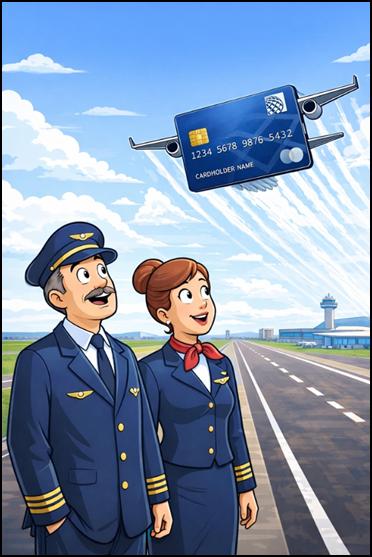 If you have ever
wondered why your experience on United Airlines has been so bad, its latest announcement
should explain that very clearly. The latest
changes to MileagePlus finally explain the rules out loud: this is no longer a
frequent flying program – it is a frequent buying program.
If you have ever
wondered why your experience on United Airlines has been so bad, its latest announcement
should explain that very clearly. The latest
changes to MileagePlus finally explain the rules out loud: this is no longer a
frequent flying program – it is a frequent buying program.
Starting with tickets bought in April, United is formally
splitting its customers into two tribes: those who carry a United credit or
debit card and those who do not. Swipe
the co-branded plastic and you get more miles per dollar, automatic discounts
on award tickets, and access to the “good” award space. Pay with someone else’s card and you get
fewer miles, or, in some fare buckets, none at all. The message is simple: you need to be a
frequent buyer, not a frequent flyer.
This is not some small tweak around the edges. United is literally doubling mileage earning
for many cardholders while cutting it for everyone else, and tying award
discounts and availability to whether you’re helping them sell financial
products. Basic economy without the card
becomes a kind of loyalty no-man’s-land – you still sit in the same cramped
seat, but your loyalty currency meter shows zero regardless of status. The airplane has become the billboard for the
credit card, not the other way around.
Why would an airline do that?
Because the airline is no longer primarily in the business of selling
you transportation from Point A to Point B.
MileagePlus itself has become a huge financial asset, a
multi-billion-dollar machine that mints its own currency and sells that
currency to banks, retailers, and anyone else who wants to dangle “miles” in
front of you. Years ago, United
literally used MileagePlus as collateral to borrow billions in the middle of
the pandemic, and analysts now value these loyalty programs at numbers that
rival or exceed the airlines that operate the planes. In other words, flying has become the side
hustle. The points business is the main
gig.
It becomes clear how incredibly weird and deceptive this
model is if you strip away the airline logos.
Imagine a supermarket inventing its own currency, selling that currency
to a bank at whatever price it feels like, and then telling you that if you use
the bank’s co-branded card to earn more of this currency you can use it to buy
“free groceries.” Now imagine that the supermarket also sets the price of the
groceries in that made-up currency, and can change those prices any time
without notice. That is exactly how
airline miles work. They sell you funny
money, then they unilaterally decide what that funny money buys, and it buys
less and less with every day that passes.
United’s latest move is just making that more obvious. “We’ll give you 10 percent or 15 percent off
in miles,” they say – while quietly raising the price 10 or 15 percent – moving
the underlying award prices around whenever revenue management feels like it. It is like getting a coupon for $100 off a
shopping trip (because you’re special) on the same day the store quietly raises
all the prices by $120. The sign on the
window says you saved money. Your wallet
definitely knows you did not.
Over time, the value of miles has done what every airline
currency does: it erodes. Award charts
vanish, saver levels turn into “starting from” suggestions, off-peak becomes a
myth, and dynamic pricing turns loyalty into surge pricing with better branding. Today’s “amazing deal” in miles will cost
more tomorrow, and a lot more the next day.
United’s latest Mileage Plus restructuring accelerates that trajectory
for anyone who is not feeding its card machine.
Non-cardholders earn fewer miles, need more miles to redeem, and are
nudged, prodded, and shamed toward the inevitable call to action: “Apply now.”
Is this a Ponzi scheme?
Legally, no. Psychologically, it
rhymes. In both cases, the pitch is that
if you get in and keep feeding the system, outsized rewards await. The reality is that the people designing the
system control both the inflow (how fast you earn miles) and the outflow (what
those miles buy and when). As long as
new money keeps coming in from banks buying miles in bulk and cardholders
paying interest and fees, the illusion holds.
The only ones who reliably win are the issuers and the airline balance
sheet. Everyone else involved meets P. T. Barnum’s
definition of one born every minute.
So when I say this version of
MileagePlus is “only for stupid people,” I do not mean people who are
bad at math. I mean people who simply refuse
to do the math. If you are proudly
earning 10 miles per dollar on a United card without ever asking what those
miles are actually worth, you are playing their game on their terms. You are buying a currency from someone who
also sets the exchange rate and changes it whenever it suits them.
Smart travelers are quietly walking away from that table. They still fly United when the schedule and
price make sense, but they are treating MileagePlus as a rebate lottery, not a
retirement plan. Instead of obsessing
over mileage multipliers, they are putting most of their everyday spend on
simple cash-back cards or flexible bank programs where a dollar earned is a
dollar they can see. A flat 2 percent
back that hits your statement every month will beat an airline mile that keeps
shrinking in value, no matter how breathlessly the marketing promises “up to”
double points.
That does not mean you cut up every airline card tomorrow. If you live in a United fortress hub, fly
them constantly for work, and can squeeze real value out of a specific card
benefit – a lounge you actually use, a free bag you otherwise would pay for, pre-boarding
that saves your carry-on, or if you happen to make purchases on-board – then
there is a rational case for one carefully chosen card. The key is that you have to evaluate the
benefits by running the numbers in dollars, not in airline pixie dust. And you have to use the card as infrequently
as possible.
For everyone else, this latest MileagePlus announcement should
be the final data point you needed. United
has told you exactly what it values now.
Loyalty is no longer measured in miles flown or years of sticking with
the brand through bankruptcies, mergers, and operational meltdowns. Loyalty is measured in how often you use
their preferred piece of plastic for everything from coffee to car repairs.
As a traveler, your counter-move is simple – and it’s the
advice we’ve been giving for years now. Choose
flights based on comfort, reliability, schedule, and real price. Treat airline miles like coupons that can and
will be devalued, not as the primary reason to do anything. And when an airline stands up and proudly
explains that the best way to “win” is to help them sell more credit cards,
believe them – then go get yourself a card that pays you in real money.

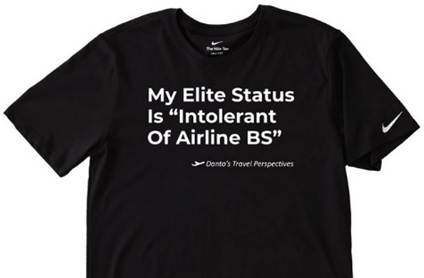 After decades of candid travel
commentary – from loyalty program “magic tricks” to hotel check-in roulette –
I’ve decided to turn some of that honesty into apparel. These aren’t novelty shirts; they’re the
exact truths every road warrior wishes they could say out loud. Whether you’re quietly muttering “My
loyalty points devalued while you read this shirt” or admitting “If
delays build character then I’m the whole movie’s
cast” you’ll find plenty of familiar sentiments… and more. Everything is
produced by a reputable outfit, with black tees that work under a sport jacket
plus hoodies and wicking travel gear for life on the road. The site also has my
honest and snarky takes on technology trade shows. Take a look at Tinyurl.com/TechAndTravelWear. Even if you’re not buying
they’re fun to read and commiserate – and if you do buy something, maybe I’ll
break even. If you want a style you
don’t see, just email me and I’ll add it.
After decades of candid travel
commentary – from loyalty program “magic tricks” to hotel check-in roulette –
I’ve decided to turn some of that honesty into apparel. These aren’t novelty shirts; they’re the
exact truths every road warrior wishes they could say out loud. Whether you’re quietly muttering “My
loyalty points devalued while you read this shirt” or admitting “If
delays build character then I’m the whole movie’s
cast” you’ll find plenty of familiar sentiments… and more. Everything is
produced by a reputable outfit, with black tees that work under a sport jacket
plus hoodies and wicking travel gear for life on the road. The site also has my
honest and snarky takes on technology trade shows. Take a look at Tinyurl.com/TechAndTravelWear. Even if you’re not buying
they’re fun to read and commiserate – and if you do buy something, maybe I’ll
break even. If you want a style you
don’t see, just email me and I’ll add it.
This article was written by David Danto and contains solely his own, personal
opinions.
All image and links provided above as reference under
prevailing fair use statutes.
Copyright 2026 David Danto
++++++++
As always, feel free to write and comment, question or
disagree. Hearing from the traveling
community is always a highlight for me.
Thanks!