

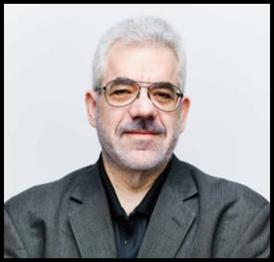

David J. Danto
Travel thoughts in my
own, personal opinion
eMail: ddanto@IMCCA.org Follow Industry News: @NJDavidD on 

The Captain We Needed
November 2026
Remembering
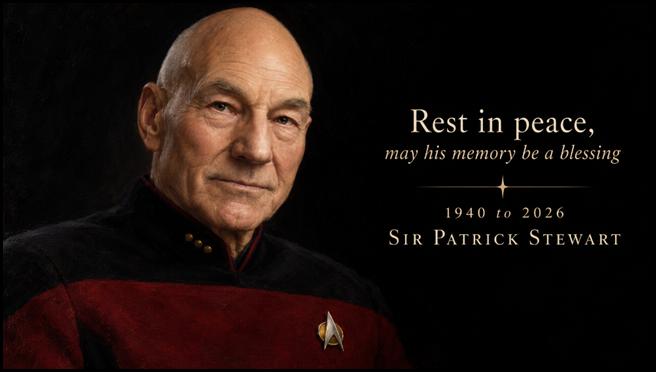
Sir Patrick Stewart, and the future he made us believe was possible.
 I don't generally write about
politics in these
columns. There are plenty of people
doing that already, and I prefer to spend my time discussing technology,
travel, and the occasional absurdity of modern life. But the passing of Sir Patrick Stewart this
week, just days before one of the most consequential midterm elections in
recent memory, has me thinking about something considerably more important than
entertainment.
I'm thinking about leadership. And integrity. And decency.
And the remarkable contrast between the leaders we have today and the
leaders we once imagined we might become.
For seven seasons of Star Trek: The Next Generation,
and later three seasons of Star Trek: Picard, Patrick Stewart regularly
brought Captain Jean-Luc Picard into our living rooms. And every time he did, he showed us what
leadership could look like when it was grounded in intelligence, compassion,
fairness, curiosity, and an unshakable moral compass.
Picard wasn't perfect.
He wasn't supposed to be. He made
mistakes, struggled with difficult decisions, and sometimes found himself
caught between competing obligations where there simply wasn't a good answer. In one of his most memorable moments, he
offered Data a lesson that extended far beyond the bridge of the Enterprise: "It
is possible to commit no mistakes and still lose. That is not a weakness. That is life." But there was
something extraordinary about watching a leader who actually wrestled with the
ethical implications of his decisions rather than simply calculating what would
benefit him personally.
When confronted with an unfamiliar life form, Picard's first
instinct wasn't to destroy it, exploit it, or declare it inferior. It was to understand it. Did it possess consciousness? Did it have
rights? What responsibilities did humanity have toward something it didn't
understand?
When encountering another civilization, his challenge wasn't
to establish which culture was superior, but to recognize that different
societies could have different values without one necessarily being less worthy
of respect. The Prime Directive wasn't
always convenient, and Picard didn't always agree with its application, but the
underlying principle was profound: having the power to impose your will doesn't
automatically give you the moral right to do so.
Imagine that.
Gene Roddenberry's original vision of Star Trek was
extraordinary because it imagined a future in which humanity had finally gotten
past the petty hatreds and divisions that have plagued us throughout history. We had survived our wars, our prejudices, our
seemingly endless capacity for self-destruction, and had emerged as something
better.
The Vulcan philosophy of IDIC, Infinite Diversity in Infinite
Combinations, captured that optimism beautifully. Differences weren't merely something to
tolerate. They were something to
celebrate. The universe was richer
because people, cultures, and civilizations weren't all the same.
And perhaps most importantly, humanity had learned that
cooperation was more powerful than division, that understanding was more
valuable than fear, and that knowledge and discovery were worth pursuing for
their own sake.
Patrick Stewart made that future believable.
My own appreciation of Stewart actually began before The
Next Generation. I remember him from
David Lynch's wonderfully bizarre 1984 adaptation of Dune, where he
portrayed Gurney Halleck. Anyone
familiar with that film knows it was an ambitious, sometimes bewildering
attempt to compress an enormous story into a conventional movie. Stewart's role was significantly reduced in
the theatrical version, but the extended cut that is available if one searches
for it contains additional footage that offers a better opportunity to
appreciate his performance.
There was already something about his presence that commanded
attention. The Shakespearean training,
the voice, the bearing, the ability to convey authority without having to shout. He had a way of making a character seem
important simply by standing in the room.
But it was Star Trek that turned that presence into
something much more meaningful.
Stewart took Roddenberry's optimistic vision and gave it a
human face. He made us believe that a
person could command an extraordinarily powerful starship without being
consumed by the power that came with it.
That someone could be authoritative without being authoritarian. That strength could be measured by restraint,
and that admitting uncertainty wasn't weakness.
Think about how remarkable that is.
We watched a fictional leader who respected expertise,
listened to his advisers, valued science, welcomed disagreement, and understood
that his responsibility was to the people he served rather than to his own ego. He could be challenged by his officers
without treating their disagreement as disloyalty. He could change his mind when presented with
better evidence. He understood that
leadership wasn't about always being right, but about doing everything possible
to arrive at the right decision.
And then there's the world we're living in today.
As Americans prepare to vote in the midterm elections, the
contrast is almost unbearable. We're
living in an era when too much of our political leadership seems to thrive on
precisely the instincts that Roddenberry believed humanity would eventually
overcome. Fear of people who are
different. Suspicion of science and
expertise. The deliberate cultivation of
anger and resentment. The replacement of
thoughtful discussion with insults, intimidation, and the endless pursuit of
personal advantage.
Where Picard saw differences as opportunities for
understanding, too many of today's leaders see them as opportunities for
division. Where he demonstrated that
power carries enormous responsibility, we increasingly see power – and wealth
for that matter – treated as an entitlement, something to be exercised against
enemies rather than in service to everyone.
And where Picard believed that truth mattered even when it
was inconvenient, we now live in a political environment where truth itself too
often seems negotiable.
It would be easy to dismiss all of this by pointing out that
Jean-Luc Picard was fictional. He was
written by talented people who could give him the right words and the right
decisions, and who could resolve enormously complex ethical dilemmas within a
television episode.
Fair enough.
But fiction has always served a purpose beyond entertainment. It allows us to imagine possibilities,
explore ideas, and establish aspirations.
We don't have to believe that every human being can become Jean-Luc
Picard to recognize that his values represent something worth striving toward.
And in Patrick Stewart's case, those values weren't confined
to the screen.
Throughout his life, Stewart used his prominence to speak out
against domestic violence, advocate for human dignity, and support LGBTQ+
rights and other causes rooted in fairness and compassion. Having witnessed domestic abuse in his own
childhood, he became a particularly passionate advocate for victims, turning
painful personal experience into a commitment to help others.
He wasn't simply portraying a man who believed in decency. He was doing his best to live those
principles himself.
That's something I find particularly moving. Actors aren't obligated to become the
characters they portray, and we certainly shouldn't confuse fictional heroism
with real-world virtue. But with
Stewart, there was a remarkable consistency between the ideals he represented
on screen and the causes he championed away from the cameras.
And he managed to do it all while retaining a wonderful sense
of humor, a willingness to laugh at himself, and an obvious delight in the
absurdities of life. For someone who
portrayed one of television's most dignified and serious captains, he could
also be spectacularly silly.
That, too, is a quality I wish we saw more often in our
leaders. You can take your
responsibilities seriously without taking yourself quite so seriously.
The timing of his death makes this loss especially poignant. Just days before Americans go to the polls to
decide the makeup of the next Congress, we've lost a man whose most famous
character represented almost everything I wish we could demand of the people
who govern us.
I'm not suggesting that we should elect politicians based on
how closely they resemble fictional Starfleet officers. But I do think we could benefit enormously
from expecting a few of the same basic qualities: honesty, intellectual
curiosity, respect for others, empathy, integrity, and an understanding that
leadership is a responsibility rather than a personal reward.
Those shouldn't be extraordinary expectations. They should be the minimum requirements.
Stewart's passing is also part of a particularly sad period
for those of us who grew up believing in the future that Star Trek
promised. Walter Koenig, the original
Pavel Chekov, died just a few days earlier.
We've lost so many of the performers who brought that optimistic
universe to life, and every passing makes the connection to that extraordinary
era feel a little more distant.
And it's not just Star Trek. With the loss of Dolly Parton earlier this
year, another person whose enormous talent was matched by an equally enormous
capacity for kindness and generosity, it sometimes feels as though the universe
has developed a particularly unfortunate sense of timing.
I've seen some angry memes circulating online in which people
are screaming at the Grim Reaper, telling him that he's obviously lost his aim
and needs to reconsider his targets.
I understand the sentiment completely.
Seriously, Grim Reaper, Walter Koenig, Patrick Stewart, and
Dolly Parton? Of all the people wandering around this planet, those are the
ones you decided to collect? Perhaps it's time for a new pair of glasses. Your targeting system clearly needs
recalibration.
Humor aside, there's a genuine sadness in watching people who
represented the better parts of humanity disappear while so much of our public
life seems increasingly dominated by its worst instincts.
But perhaps that's the wrong way to look at it.
Patrick Stewart spent decades helping us imagine a better
future. Not a perfect one, but one in
which people had learned to treat each other with dignity, where differences
were celebrated rather than weaponized, and where leaders understood that
wisdom and compassion were not signs of weakness.
That vision doesn't disappear because the man who embodied it
is gone. It remains something we can
aspire to, something we can teach our children, and something we can demand of
those who ask for the privilege of leading us.
Next week, Americans will have an opportunity to make choices
about the kind of leadership they want. I
know what qualities I'll be looking for.
Sir Patrick Stewart may have left us, but Jean-Luc Picard's
example remains.
And perhaps the most fitting tribute we can pay to both the
actor and the character is to remember that the better future they showed us
isn't something we're supposed to sit around waiting for.
It's something we're supposed to create.
Make it so.


After
decades of candid travel commentary – from loyalty program “magic tricks” to
hotel check-in roulette – I’ve decided to turn some of that honesty into
apparel. These aren’t novelty shirts;
they’re the exact truths every road warrior wishes they could say out
loud. Whether you’re quietly muttering “My
loyalty points devalued while you read this shirt” or admitting “If
delays build character then I’m the whole movie’s
cast” you’ll find plenty of familiar sentiments… and more. Everything is
produced by a reputable outfit, with black tees that work under a sport jacket
plus hoodies and wicking travel gear for life on the road. The site also has my
honest and snarky takes on technology trade shows. Take a look at Tinyurl.com/TechAndTravelWear. Even if you’re not buying
they’re fun to read and commiserate – and if you do buy something, maybe I’ll
break even. If you want a style you
don’t see, just email me and I’ll add it.
This article was written by David Danto and contains solely his own, personal
opinions.
All image and links provided above as reference under
prevailing fair use statutes.
Copyright 2026 David Danto
++++++++
As always, feel free to write and comment, question or
disagree. Hearing from the traveling community
is always a highlight for me. Thanks!